If your child is unable to feed or eat enough to grow and develop, they may need a feeding device.
You can give all, or some, of your child’s nutrition, as well as water and medicines through a feeding device.
This is often called tube feeding. It is different from oral feeding, which is by mouth. Your child’s dietitian can discuss this with you in more detail.
Types of feeding devices
Short term tubes
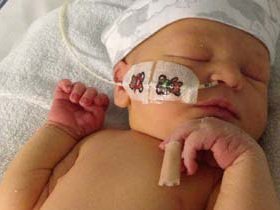
Nasogastric tubes, otherwise known as NG tubes, are for short-term use. They are long, thin tubes that enter through the nostril, move down the throat and end in the stomach.
Most tubes need replacing about once a month – or more often if they are dislodged or pulled out. After training, some parents and carers choose to replace the nasogastric tubes themselves.
Nasojejunal tubes are like nasogastric tubes but are longer. They are passed in the same way, but end in the small intestine. This type of tube is inserted if your child cannot tolerate NG feeding.
Long term tubes
Gastrostomy
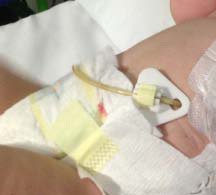
If your child needs tube feeding on a long-term basis, it may be better to consider a gastrostomy. This tube is also known as a PEG or G-tube or PEG. A surgeon makes a small hole (called a stoma) through the abdominal wall into the stomach.
There are two common types of gastrostomies:
A Percutaneous Endoscopic Gastrostomy (PEG) is a long flexible tube that fits in the stoma. A soft plastic disc holds it in place. The gastrostomy tube can stay in for a couple of years before needing replacement. It is extremely difficult for children to pull this tube out due to the way it is secured.
A gastrostomy button is a smaller device that fits in the stoma. A water-filled balloon holds it in place. Gastrostomy buttons are replaced every 3-6 months. This is done by removing the water from the balloon and inserting a new button. A community nurse may change your child’s gastrostomy button or teach you to do this.
A Malecot tube is a temporary device inserted directly into the stomach and is stitched to the skin. It stays in place for about 6 weeks before being changed to a gastrostomy button.
Gastrostomy tubes can be inserted in different ways. Speak to your doctor to understand more about the different methods that are used.
The different tubes have advantages and disadvantages. Your doctor will discuss these with you.
Types of feed delivery
There are two ways to feed your child using a feeding device: by bolus or using a feeding pump. You may need to use both methods at different times of the day.
Bolus feeds: a syringe or gravity feeding set is attached to the feeding tube. The feeds flow by gravity into your child’s stomach, for 15–20 minutes each time. Some children tolerate the feed quicker but others may need the feed to go in slower.
Pump feeds: an electric pump connects to the feeding tube or button by a tube called a ‘giving set’. The pump is set to give a certain amount of feed over a set period of time. Gastrostomy pump feeds can be given during the day and/or overnight while your child is sleeping.
Overnight pump feeding through a nasogastric tube is not safe. If your child pulls the NG tube while feeding with the pump, it can dislodge and cause aspiration. Aspiration is when feed accidentally goes into the lungs. NG pump feeding during the day is possible but you need to be with your child at feeding times.
Effect on appetite
Some parents worry that using a feeding tube will reduce their child’s appetite for a normal oral diet. It is difficult to know whether the tube feed will have a further impact on their appetite and food intake but the tube feed will make sure they have the nutrition that they need to develop and grow.
If you have noticed a reduction in appetite, your dietitian can adjust the feeding plan. They may be able to schedule the feeds away from mealtimes to help them feel hungrier.
Oral feeding with tube feeding
Tube feeding can be a very positive step. It can be reassuring to know that there is no need to worry if your child eats poorly.
Remember it is important that eating skills that have been learnt are not forgotten. Keep some oral feeding going if possible. Eating is generally enjoyable and is a chance for your child to socialise, as well as develop skills.
If your child takes even small amounts of food, this will help them to accept tastes and textures. This will also encourage your child to accept food later on. Offer your child something to eat when giving a tube feed. This will help them to associate the tastes, smells, and feelings of fullness with eating.
Your baby can still breastfeed, bottle feed and wean while being tube fed if safe to do so. Doing this at the time of a tube feed helps your child to associate sucking with a feeling of fullness. If you find a dummy (pacifier) helpful, dip it in milk.
A few children with chronic kidney disease may not eat food at all. This may be due to multiple factors including their kidney disease, poor appetite, reflux, vomiting or taste changes. It is important not to force your child to eat. Messy food play will help encourage a positive food experience for your child.
Tube feeding after a kidney transplant
After a kidney transplant, your child may feel hungrier and start to eat more. The tube feed will be gradually reduced. Most children stop needing the tube for feeding soon after a transplant (a few weeks to a few months), although children who haven't managed to eat or feed orally before the transplant often take longer to wean off tube feeds and need additional support. Some children continue to need the tube for medication and fluid even if they no longer need it for feed.
Summary
Tube feeds help to keep a child well-nourished and support growth and development when they are not able to take enough nutrition by mouth. There are short-term and long-term feeding tubes. Your team will discuss with you which one is right for your child. Continuing to involve your child at mealtimes is important.
This web page is printer-friendly.
To save the page as a PDF, print as normal and select "Save as PDF" as your printer destination.